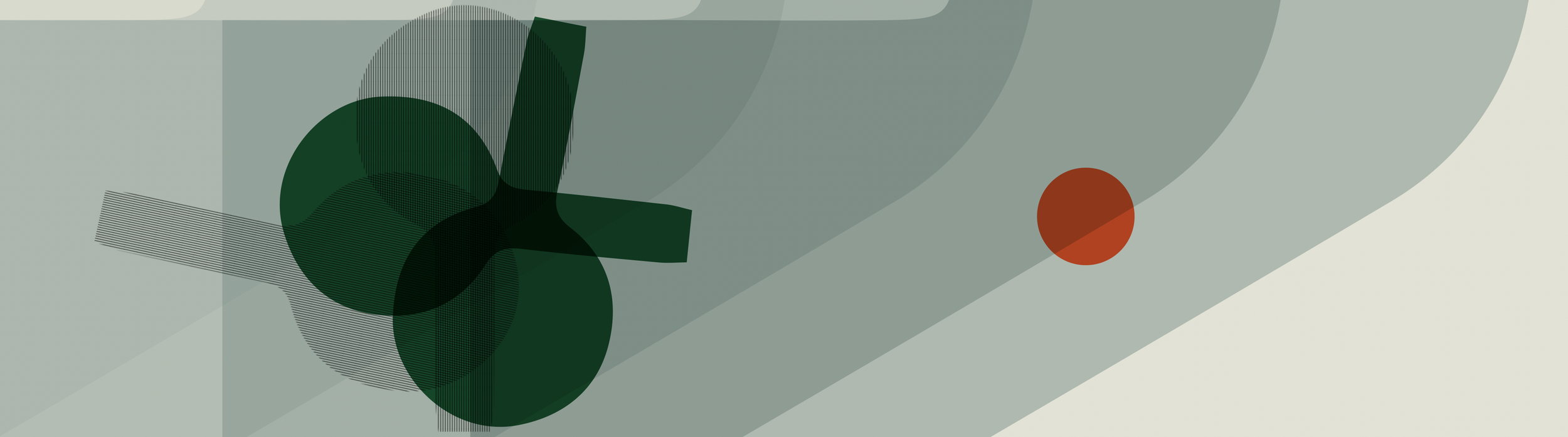
Imbroglio Variations: Infinite Order
My practice explores geometry, colour, repetition and visual rhythm through limited edition prints, textiles and architectural surface design. The Imbroglio series investigates how ordered geometric structures evolve through subtle disruption, balancing precision with unpredictability to create a tension between order and apparent chaos.
Imbroglio Variations: Infinite Order extends this exploration into moving image, drawing inspiration from Jean-Pierre Vitrac’s iconic calendar. The original Imbroglio print collection evolved from its elegant typographic system of horizontal and vertical graphic divisions. This animation takes that underlying structure and translates it into a framework for experiencing time.
Rather than simply representing time, the work uses the calendar’s graphic divisions as a temporal score, determining the animation’s movement, pacing and rhythm. Designed without a defined beginning or end, the animation can be encountered at any point in its cycle. Where the calendar measures the passing of days, Imbroglio Variations explores the unfolding of visual time through duration, repetition and transformation.
Developed using Adobe Illustrator and After Effects, the animation draws on an extensive library of vector elements taken directly from the Imbroglio print collection. Individual forms rotate, scale, translate and layer, continually reorganising into geometric compositions before dissolving and reforming. This modular approach allows elements to move independently while maintaining a coherent visual identity.
The movement is deliberately slow and contemplative rather than spectacular, inviting viewers to observe subtle shifts in colour, spatial relationships and visual rhythm. Moments of apparent order emerge before gradually fragmenting, reflecting the ongoing relationship between structure and disruption at the heart of the collection.
Rooted in my established visual language, the work combines precise vector geometry, balanced colour palettes, transparency, layering, repetition and subtle optical movement. After Effects provides the tools to extend the graphic precision of the original prints into motion, while the modular construction allows the animation to adapt to both portrait and landscape LED screens without compromising its composition or visual quality.